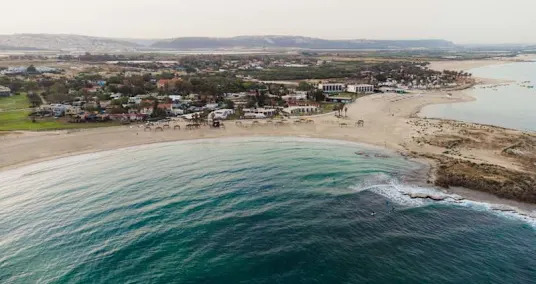
The discovery was made in an ancient shipwreck in the Dor Lagoon near the Carmel Coast, where archaeologists recovered nine pieces of unprocessed iron known as “blooms.”
Researchers from the University of Haifa said Wednesday that an underwater excavation off Israel’s northern Mediterranean coast uncovered what they described as the earliest known cargo of raw iron transported by ship, dating back around 2,600 years, Xinhua reported.
The discovery was made in an ancient shipwreck in the Dor Lagoon near the Carmel Coast, where archaeologists recovered nine pieces of unprocessed iron known as “blooms.” According to the university, the find provides direct evidence of how iron was transported in its earliest commercial stages.
The material was preserved in its original form, having solidified directly in a smelting furnace without undergoing forging or further refinement. Researchers said this distinguishes the cargo from later iron artifacts that typically show signs of shaping or tool-making.
Unlike copper and bronze, which could be melted into liquid form in ancient production processes, iron was heated with charcoal to produce a solid, porous mass. That mass was generally hammered to remove impurities and create denser material suitable for tools and implements.
The recovered blooms showed no indication of that secondary processing stage, suggesting they were transported immediately after production.

Earliest iron shipment discovered in ancient Mediterranean wreck
To determine the age and condition of the cargo, researchers conducted microscopic and chemical analyses.
Radiocarbon dating was also carried out on charred wood embedded in one of the pieces, helping confirm the timeline of the shipment. The findings were published in the journal Heritage Science.
Researchers said the cargo indicates that iron was being moved in raw form from production sites to other locations for further processing, pointing to a level of specialization in ancient manufacturing and trade networks in the Mediterranean.
The University of Haifa said the discovery provides new insight into early iron production and distribution practices in the region.
LATEST POSTS
- 1
 ‘Serving is not just a place’: Bayside Church Granite Bay reimagines annual mission amid conflict in Mexico
 - 2Artemis 2 breaks humanity's all-time distance record during historic loop around the moon (video)
- 3Meet the astronauts about to make history on flight around the moon
- 4Travels to Dream Objections in Europe
- 5‘Downton Abbey: The Grand Finale’ hits streaming: How to watch, cast info and everything you need to know




- Figure out how to Amplify Your Open Record Reward
- 6 Fun Urban areas For Seniors To Travel
- Creative Tech Contraptions That Will Work on Your Life
- Birds at a college changed beak shapes during the pandemic. It might be a case of rapid evolution
- Clones of Stumpy, Washington D.C.'s beloved cherry blossom tree, have flowered for the first time
- Ancient Egyptian pharaoh's boat is being reassembled in public at the Grand Egyptian Museum
- 'You're no longer my sister' - rows erupt as war divides Iranian families
- How a seabird native to Hawaii has adapted to life in Honolulu's concrete jungle
- Governments take targeted action as fuel prices hit retail